Being trained as a geographer, there are very few opportunities to study religion in the way a scholar of religion typically would. To be transparent, I am still trying to understand how my work can effectively bridge the gap between these disciplines. The musings I share here will begin to help me do so. I consider this post a fieldwork reflection.
In the summer of 2024, I was delighted to be able to travel to Peru for a fieldwork season. I learned an inconceivable amount from those I worked alongside, and grew in my vision as a scholar.
Spiritual tourism
Peru is depicted in tourism marketing and other forms of digital media as a highly ‘spiritual’ place… and for good reason. There is no doubt that ‘spiritual’ or ‘religious’ meaning is readily produced in day-to-day lives. In Peru, the blending of religious traditions—namely Catholicism and Andean cosmologies—are described as syncretism. This unique variant of Christianity does not fit neatly into a single denominational category, which piques the interest of people around the world. Peru is also well set-up to succeed in the spiritual tourism industry: from spiritual retreat centres to ayahuasca lodges and “Inka” pilgrimages, tourism organizations dot the landscape from the Andes to the Amazon. Even the name of the most popular destination, the Sacred Valley (home to Machu Picchu), oozes religion.
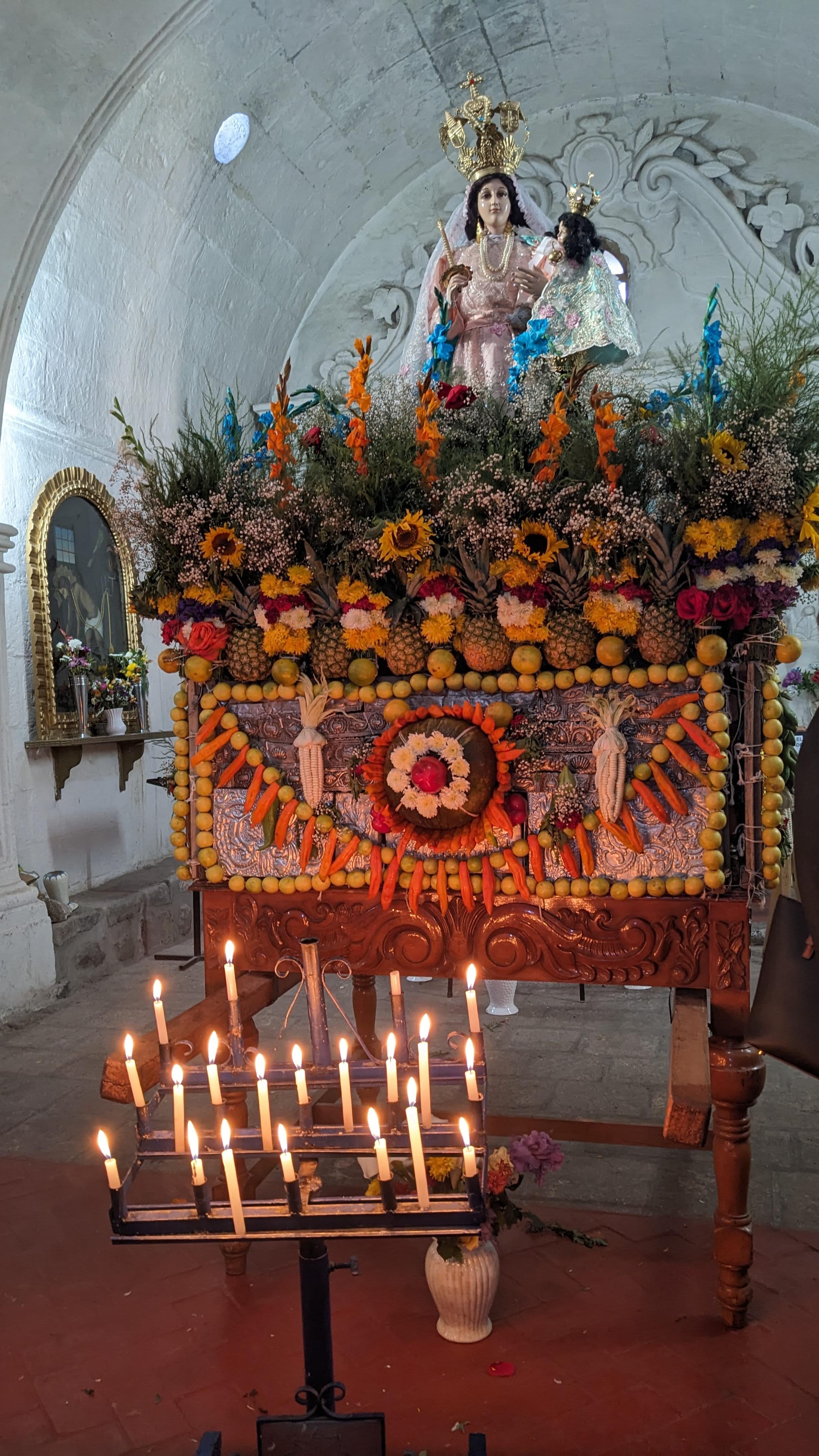
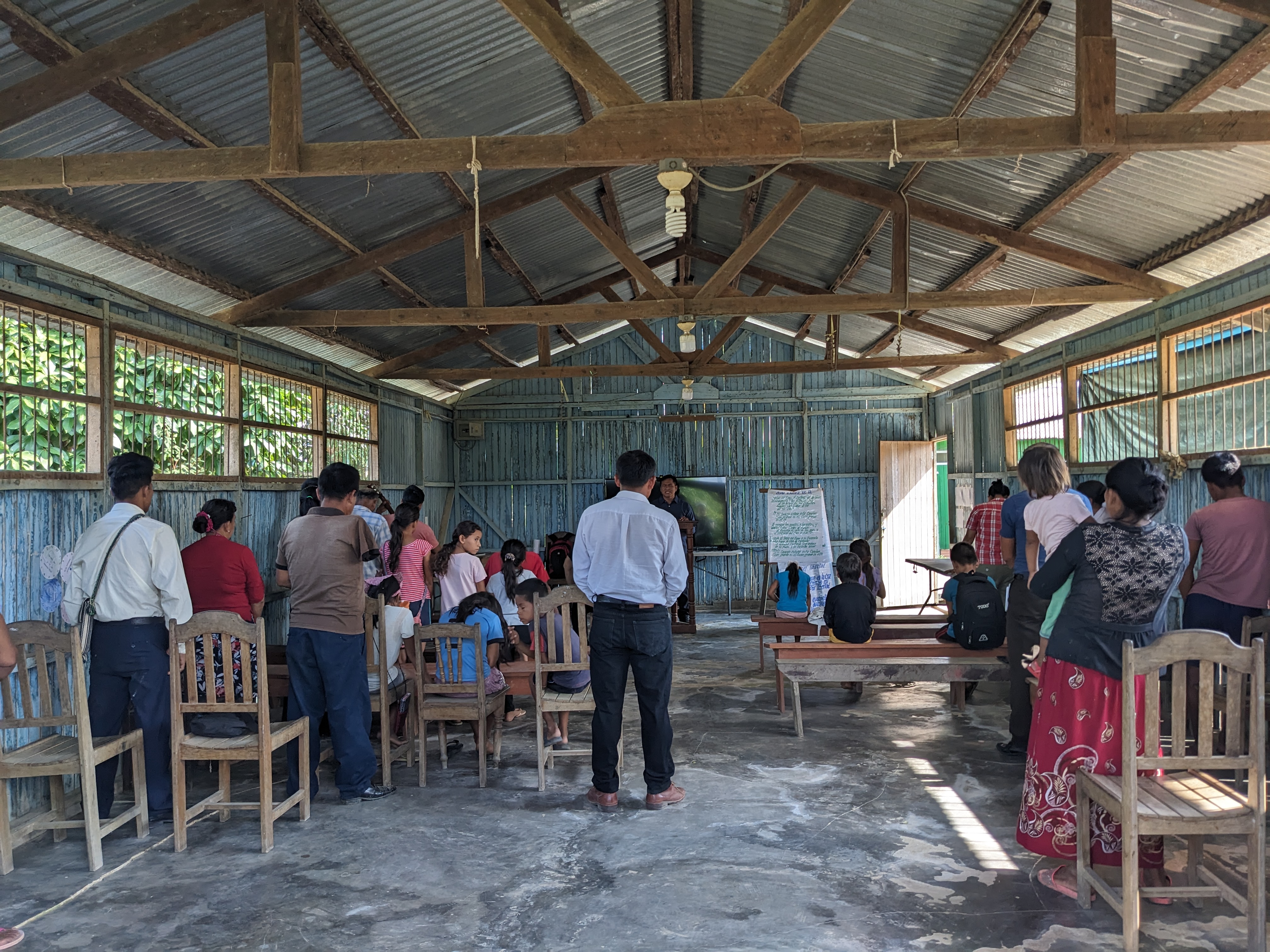
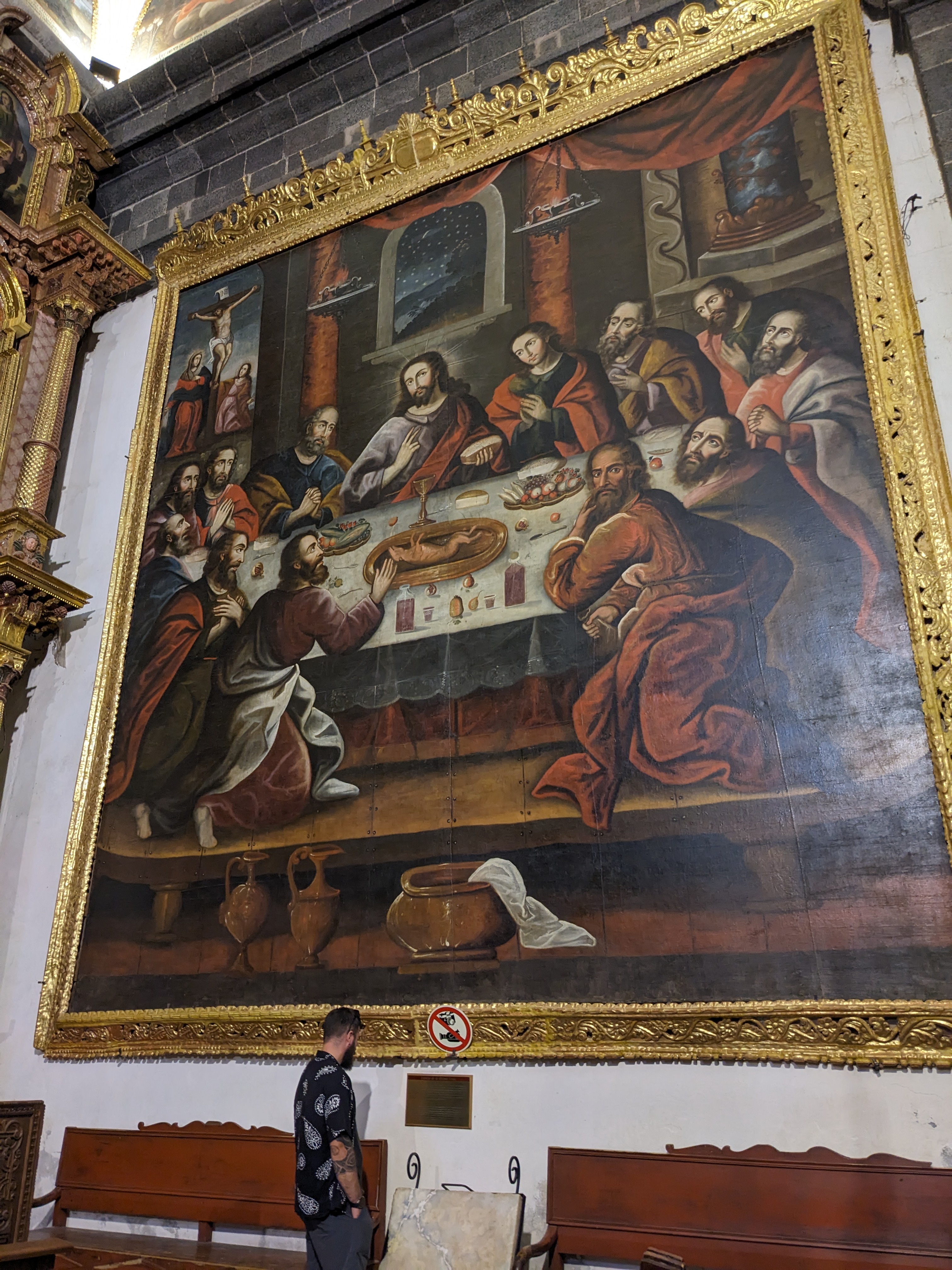
Where, however, is the line between real, embodied experiences and what tourists are told is authentic and traditional? This raises important questions about the commodification of the sacred. Is it ethical for spiritual practices and experiences to be catered to specific audiences for their consumption? I guess the answer is not all that straightforward. While it was clear to me that tourism provides important economic opportunities for local people, I felt uncomfortable seeing spirituality be performed in the ways it sometimes was.
What also complicates this line of questioning is that many visitors arrive with sincere intentions. Some are searching for healing, others for a sense of connection, or just to relax. Perhaps these activities are shaped by a deeper desire for meaning, authenticity, and encounter.
Landscape
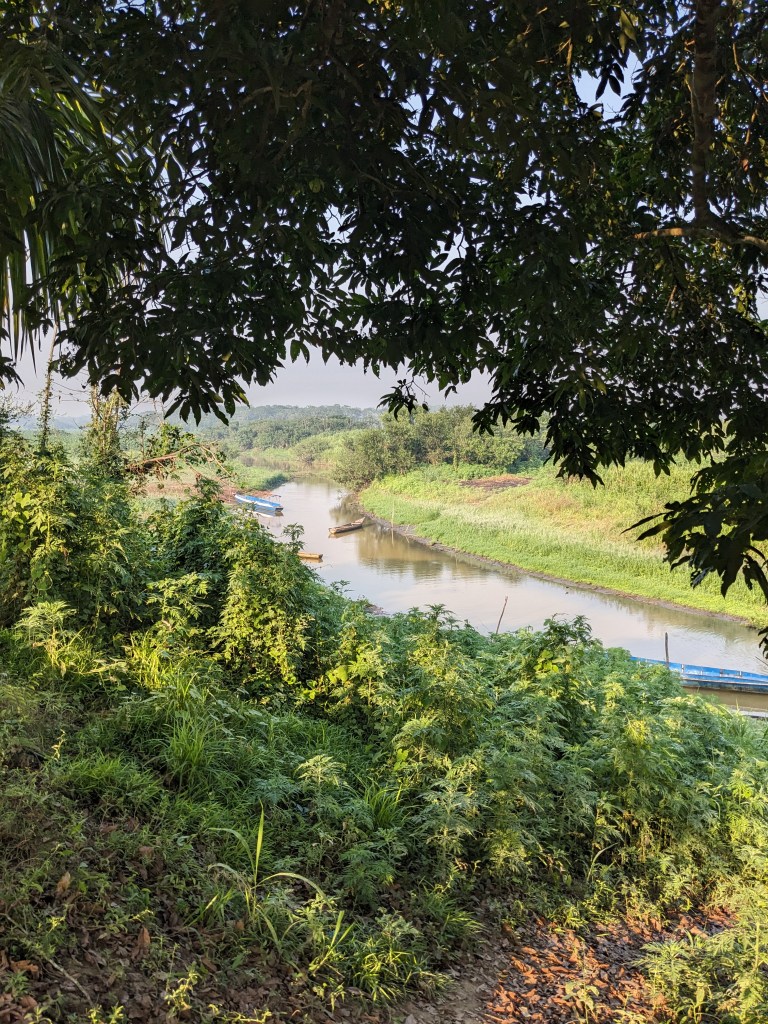
Landscape and place were another aspect of my fieldwork that left a strong impression on me.
I was also struck by how closely spiritual meaning and people’s understanding of God were tied to landscape. Rivers, rain, and mountains all held spiritual meaning. The volcanoes and high mountains in the Andes were named as apus (lords) and served as intermediaries between the human and god worlds. Meanwhile in the Amazon, people understood that God was in control over the floods and unpredictable supplies of fish, and associated quite a lot of meaning, identity, and praise towards God for blessing them with these material things as an exchange for their obedience and (at times) financial giving.
I also noticed that there was a certain level of reverence and reciprocity associated with the divine and human through these interactions in both regions. Reciprocity signaled oneness and unity, despite other differences that might indicate division or fragmentation within communities. As people naturally acted to promote unity with one another, unity between the apu and human worlds were also promoted and produced.
As a researcher, my fieldwork was fascinating. As a human, my fieldwork changed me. Throughout my time in Peru, I found myself constantly reflecting on my own positionality and on how little I truly knew. Fieldwork has a way of humbling you—and that is something worth embracing. It inspires me to return, open my heart, and learn again.

 Joycelin Van Caulart